
2 Piece Can
2 Piece Can
Discover premium 2 Piece Cans from Zhangzhou Yucheng, a professional China manufacturer since 1996. Our two-piece metal cans feature a seamless one-piece body with integrated bottom, formed using advanced DWI (Drawn & Wall-Ironed) or DRD (Drawn & Redrawn) technology. With no side seam, these cans ensure superior airtight integrity, leak-proof performance, and full-body high-definition printing for enhanced brand presentation. Applications include beer, carbonated soft drinks, functional beverages, energy drinks, tea beverages, coffee, canned foods (seafood, meat, fruits, vegetables, evaporated milk, soup), and pet food. Available in aluminum and tinplate with customizable internal coatings (BPA NI available). Enquire now for OEM/ODM custom orders!
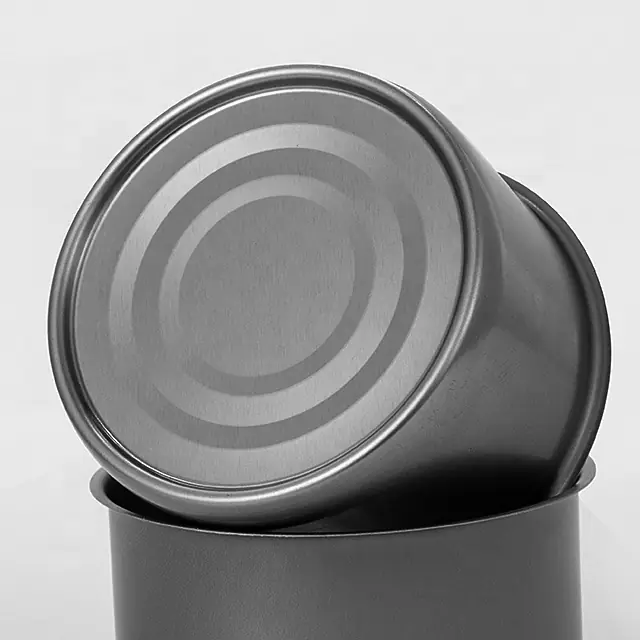
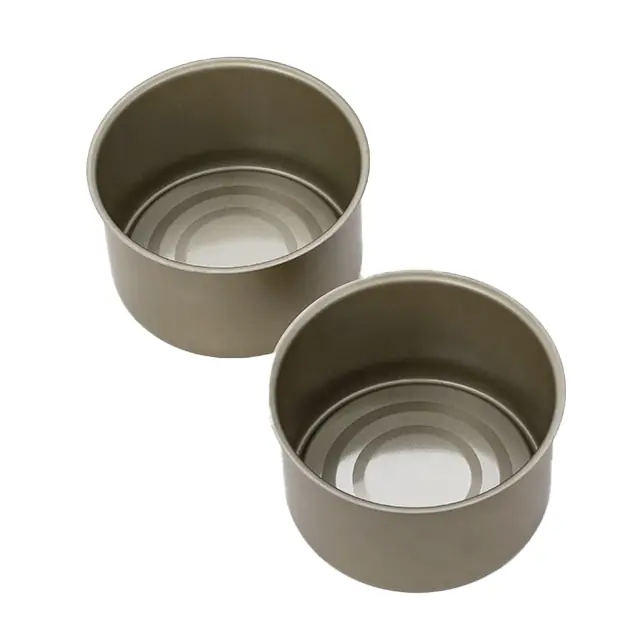
As a professional can-making enterprise integrating production, R&D and sales, Zhangzhou Yucheng Metal Products Co., Ltd. has been deeply engaged in the metal packaging industry since 1996. With decades of manufacturing expertise and a steadfast commitment to quality and innovation, we have become a trusted supplier of both two-piece and three-piece metal packaging solutions for the global market.
A 2 Piece Can, also known as a Two-Piece Can or Seamless Can, is a modern metal container constructed from two components: a unitary can body with integrated bottom formed from a single sheet of metal, and a separate can lid (normal lid, easy open end, or stay-on-tab beverage end) that is double-seamed onto the body after filling. Unlike traditional three-piece cans which have a welded side seam and a separate bottom end, two-piece cans feature a seamless, leak-proof body that delivers superior structural integrity and hygiene. The two-piece can was first developed in the mid-20th century, with Coca-Cola pioneering its adoption in 1963. Today, two-piece cans are the dominant packaging format for beverages worldwide and are increasingly adopted in food applications for their lightweight, high-efficiency, and excellent sealing properties.
The 2 Piece Can offers a range of compelling advantages that have made it the preferred packaging solution for high-volume, high-speed production lines.
Two Manufacturing Technologies: DWI and DRD
Two-piece cans are manufactured using two primary forming techniques—Drawn & Wall-Ironed (DWI) and Drawn & Redrawn (DRD)—each suited to specific applications and material types.
DWI (Drawn & Wall-Ironed) Technology: Also known as D&I (Drawn & Ironed), this advanced process is the industry standard for high-volume beverage can production. In the DWI process, a circular metal blank is first drawn into a shallow cup, then pushed through a series of precision ironing rings that progressively thin and elongate the sidewalls to achieve the desired can height. The wall-thinning rate can reach up to 50%, enabling significant lightweighting while maintaining structural integrity. DWI technology is predominantly used for aluminum two-piece beverage cans (beer, soda, carbonated soft drinks, energy drinks) and is also applicable to tinplate for certain steel beverage can applications. In Europe, two-piece cans from tinplate are mostly produced as DWI cans for carbonated beverages.
DRD (Drawn & Redrawn) Technology: This process involves multiple drawing stages to progressively form a seamless cup-shaped container from a flat metal sheet, with each redraw step reducing the diameter and increasing the height. Unlike DWI, DRD does not involve wall ironing (thinning), making it better suited for shorter, wider containers and applications where uniform wall thickness is desired. DRD technology is commonly used for food cans, aerosol containers, and specialty applications. Two-piece DRD cans of smaller height are typically produced from pre-lacquered ECCS (Electrolytic Chromium-Coated Steel, also known as Tin-Free Steel) for food can applications. The DRD structure supports consistent forming, redrawing, trimming, and coating processes on automated production lines.
Both DWI and DRD technologies offer significant advantages over three-piece construction: seamless integrity eliminates potential leak paths at the side seam; the integrated bottom removes the need for a separate bottom double seam, reducing material consumption and potential failure points; and the smooth uninterrupted surface enables full-body, high-definition lithographic printing for premium brand presentation. Production speeds for two-piece cans are exceptionally high, with bodymaker lines achieving hundreds of cans per minute. Two-piece DRD lines range from 60 to over 400 cans per minute depending on the application, while advanced DWI lines for beverage applications operate at even higher speeds.
Superior Seal Integrity and Extended Shelf Life
One of the most significant advantages of the 2 Piece Can is its superior sealing performance. Because the can body has no side seam and there is no seam between the body and the bottom end, the container is inherently airtight with fewer potential points of failure compared to three-piece welded construction. The only seam on a two-piece can is the double seam between the body and the lid after filling—a critical connection that is executed with precision using advanced seaming equipment. This airtight design effectively blocks oxygen, moisture, and light, preserving the freshness, flavor, nutritional value, and carbonation of the contents. For carbonated beverages, the seamless body also withstands internal pressurization more reliably than seamed alternatives, contributing to the two-piece can‘s dominance in the beer and soft drink industries.
For food applications, two-piece cans deliver equally strong sealing performance for wet or acidic contents such as soups, seafood, evaporated milk, and tomato products, where absolute seal integrity is essential.
Full-Body Decoration for Premium Brand Presentation
The seamless exterior of a two-piece can enables full-body, 360-degree high-definition printing—a significant marketing advantage over three-piece cans, where the welded side seam interrupts the decorative surface. All two-piece cans are printed using advanced dry-offset or lithographic printing techniques on cylindrical surfaces after forming, allowing vibrant CMYK full-color graphics, PMS color matching, special effect coatings (matte/gloss varnish contrasts, metallic effects), and photo-quality imagery that wraps seamlessly around the entire can body with no interruption or gap. This uninterrupted canvas enables beverage brands to deliver maximum visual impact on retail shelves and is a key reason why premium beer, energy drink, and functional beverage brands overwhelmingly choose two-piece can packaging.
Lightweight Construction and Material Efficiency
Two-piece cans are inherently more material-efficient than three-piece cans of comparable capacity. The elimination of the welded side seam removes the need for overlapping material at the joint. In DWI cans, the wall-ironing process also achieves significant metal thinning in the sidewall (up to 50%), concentrating material only where strength is needed while reducing overall metal consumption per can. This lightweighting translates directly into lower raw material costs per unit, reduced shipping weight, and lower carbon footprint throughout the supply chain—benefits that are increasingly critical for global brand owners facing sustainability targets and extended producer responsibility (EPR) requirements.
Material Options: Aluminum and Tinplate (Steel)
Our two-piece cans are available in both aluminum and tinplate (steel) , each with distinct performance characteristics suited to specific product applications.
Aluminum Two-Piece Cans: Aluminum is the predominant material for beverage two-piece cans due to its combination of lightweight, excellent formability, corrosion resistance, and fast cooling properties. Aluminum cans also exhibit superior performance for carbonated beverages, effectively retaining internal pressure while remaining lightweight and cost-effective. Aluminum‘s high thermal conductivity helps beverages cool quickly when refrigerated, a functional benefit valued by consumers. The material is also infinitely recyclable with a high scrap value, supporting strong circular economy outcomes.
Tinplate (Steel) Two-Piece Cans: Steel two-piece cans offer higher strength, excellent light-blocking properties (providing superior protection for light-sensitive products), and enhanced barrier performance for oxygen-sensitive contents. Steel‘s magnetic properties also facilitate easier separation in recycling streams. Tinplate two-piece cans are commonly used for certain beverage applications (steel beer and soft drink cans in select markets), food applications, and aerosol containers. Developments in DI tinplate for two-piece food cans have enabled the commercialization of lightweight steel two-piece cans with body wall thinning rates meeting high-efficiency production demands.
Customizable Internal Coatings for Food Safety
Our two-piece cans feature a full range of internal lacquer coatings tailored to the specific chemical characteristics of your product. The internal coating serves as a critical barrier layer, preventing the packaged contents from corroding the metal while preventing metal ions from migrating into the food product.
Epoxy Phenolic Lacquer (Gold): This is the industry standard internal coating for both beverage and food two-piece cans. Epoxy phenolic linings bond securely to the metal substrate, effectively resisting acids, solvents, oils, and alkaline solutions—making them suitable for carbonated beverages, fruit juices, acidic foods, tomato products, and seafood.
White Polyester BPA-NI Coating: Developed specifically for high-safety applications such as infant formula, sensitive food products, and brands with strict BPA-free requirements. This coating formulation is intentionally manufactured without the intentional addition of Bisphenol-A, complying with EU, FDA, and other global regulatory standards for food contact materials.
Epoxy Varnish for General Beverage & Food Protection: Provides effective corrosion resistance for non-aggressive products while ensuring that the packaged product remains untainted by metal contact. The coating forms a protective film that prevents direct contact between the food product and the metal substrate throughout the product’s shelf life.
Aluminized Spray Coating: For specialty applications requiring enhanced protection in specific zones, particularly in DWI cans where wall thickness variations may affect coating uniformity.
Custom Coating Formulations: BPA Non-Intent (BPA NI) formulations are available upon request for all coating types, supporting brand owner requirements for BPA-free packaging solutions. All coatings comply with ISO 9001 quality management systems and applicable EU, FDA, and GB/T food contact standards.
Additional Design Features: Necking, Flanging, and Doming
Modern two-piece cans incorporate several advanced design features that enhance functionality and production performance.
Necking: This process involves progressively reducing the diameter of the can‘s top opening through a series of necking stations. Necking reduces the amount of metal required in the end (lid), lowering material costs while improving double-seam integrity and handling characteristics on filling lines. Multi-stage necking is standard practice on beverage two-piece can lines.
Flanging: After necking, the top edge of the can body is flanged outward, creating a curl that is designed to interlock with the lid’s curl during the double-seaming process. Precise flanging geometry is critical for achieving consistent seam integrity and preventing leaks.
Domed Base (Profiled Bottom): Many two-piece cans, particularly those for carbonated beverages, feature a domed or profiled bottom. This concave shape strengthens the can‘s ability to withstand internal pressurization, improving buckle resistance and drop performance while also reducing material usage.
Wide Range of Applications
Two-piece cans are widely used across a diverse spectrum of product categories, driven by their excellent sealing properties, production efficiency, and lightweight construction.
Beverage Applications: Two-piece cans dominate the global beverage industry. Specific beverage categories include:
Beer: The single largest application for two-piece cans worldwide, driven by the continuing shift from glass bottles to cans due to superior light-blocking protection, lighter shipping weight, and higher recyclability.
Carbonated Soft Drinks (Soda): Colas, lemon-lime sodas, root beers, ginger ales, and tonic waters—all rely on the two-piece can‘s ability to maintain carbonation pressure throughout the product’s shelf life.
Energy Drinks: The seamless, high-impact graphics achievable on two-piece cans are particularly well-suited to energy drink branding, which often relies on bold visual differentiation.
Functional Beverages: Sports drinks, electrolyte beverages, vitamin-enhanced waters, and plant protein drinks.
Ready-to-Drink (RTD) Tea and Coffee: Iced tea, cold brew coffee, milk tea, and chai tea beverages benefit from the two-piece can‘s oxygen barrier, which preserves flavor and prevents oxidation.
Juices and Juice Drinks: Fruit juices, vegetable juices, and blended juice drinks—particularly those that are pasteurized and shelf-stable.
Sparkling Water and Seltzers: The growing carbonated water segment relies heavily on two-piece aluminum can packaging.
Food Applications: While three-piece cans remain common in food packaging, two-piece cans are increasingly adopted for specific food categories where seamless integrity and full-body decoration offer distinct advantages:
Canned Seafood: Tuna, sardines, salmon, mackerel, crab, and other seafood products—seamless construction eliminates potential contamination sources at the side seam, an important food safety consideration.
Canned Meat: Processed meats, corned beef, luncheon meat, chicken, and ham products.
Canned Fruits and Vegetables: Peaches, pears, pineapples, fruit cocktail, corn, beans, peas, tomato paste, and tomato sauce.
Evaporated and Condensed Milk: The absence of a side seam eliminates a potential bacterial harborage point, making two-piece cans particularly suitable for dairy-based products.
Soup and Broth: Ready-to-eat soups, broth concentrates, and liquid meal replacements.
Pet Food: Wet dog food and wet cat food in single-serve can formats.
Other Applications:
Aerosol Containers: Two-piece DRD cans are used for aerosol products including personal care aerosols (hairspray, deodorant), household cleaners, insecticides, and industrial aerosols.
Specialty and Premium Packaging: The premium visual presentation enabled by full-body seamless printing makes two-piece cans an attractive option for specialty food brands, gift packaging, and limited-edition product releases.
Distinction from Three-Piece Cans
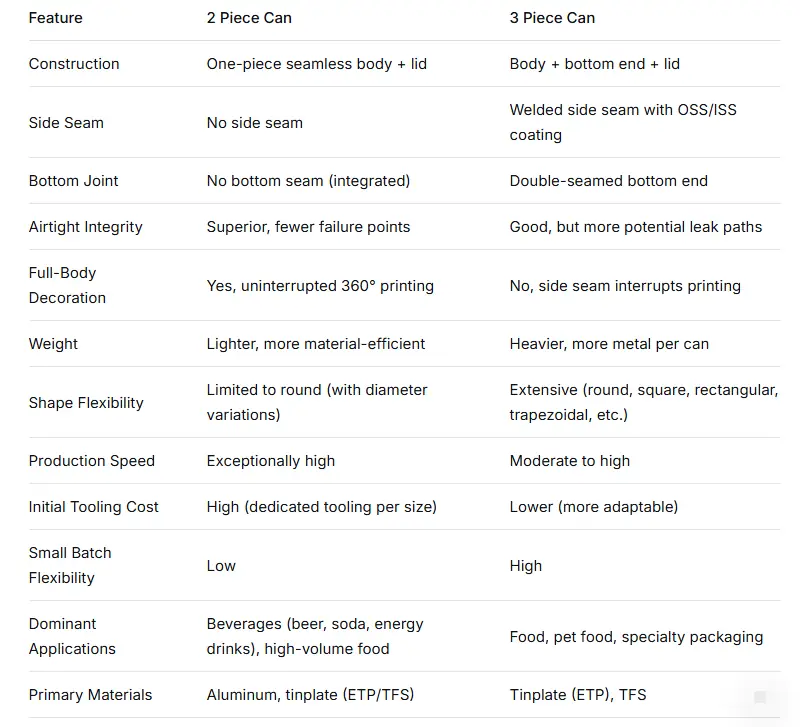
While three-piece cans (constructed from a body, bottom end, and lid) maintain a strong presence in food packaging due to their exceptional size flexibility and ability to withstand long retort cycles, two-piece cans offer distinct advantages for high-volume, standardized applications.
Quality Assurance and Certifications
At Zhangzhou Yucheng, quality and food safety are our highest priorities. Our two-piece cans are manufactured in full compliance with ISO 9001 quality management systems and can be produced to meet EU, FDA, FSSC22000, and GB/T standards. All internal coatings comply with applicable global food contact regulations, with BPA Non-Intent (BPA NI) formulations available upon request. We continuously invest in advanced production and testing equipment to ensure every two-piece can meets the highest international standards for sealing performance, structural integrity, and food safety.
With decades of industry expertise, robust quality control systems, and responsive after-sales service, we ensure that every customer requirement is met with professionalism and care. Choose Zhangzhou Yucheng for innovative, lightweight, and high-performance two-piece can solutions—where seamless technology meets packaging excellence.